Common Reasons the Check Engine Light Comes On
What Does a Check Engine Light Mean?
Few things are more unsettling for drivers than seeing the check engine light illuminate on the dashboard. It can appear suddenly while driving or illuminate when you start your car, leaving many drivers wondering whether it signals a minor issue or a serious mechanical problem. Understanding what this warning light means can help you respond appropriately and potentially avoid costly repairs.
What Is the Check Engine Light?
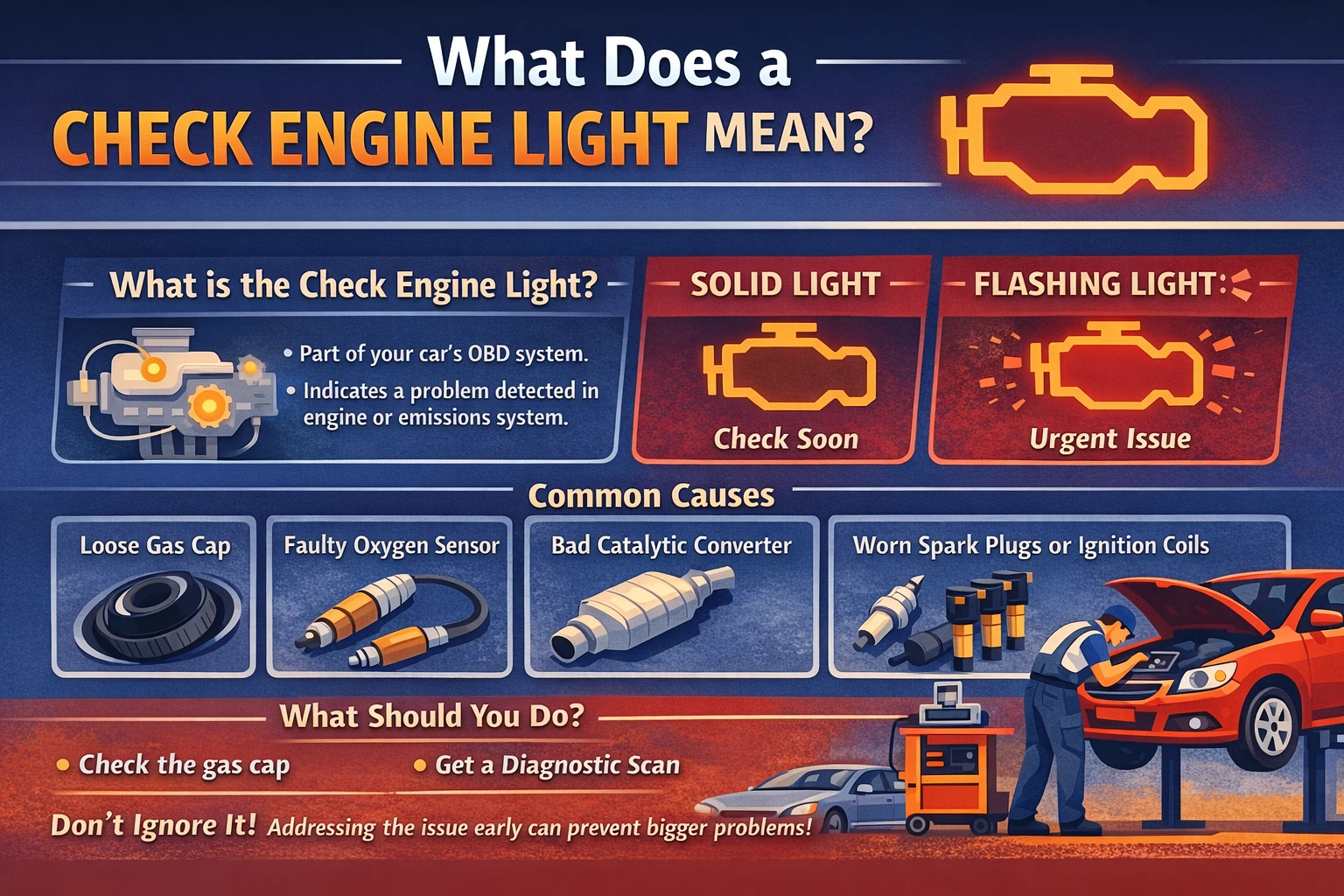
The check engine light is part of your vehicle’s onboard diagnostics system, commonly known as OBD-II (On-Board Diagnostics II). Modern cars use a network of sensors and computers to monitor engine performance, fuel efficiency, and emissions. When the system detects something operating outside of normal parameters, it stores a diagnostic trouble code and triggers the check engine light on your dashboard.
This light is essentially your vehicle’s way of telling you that something in the engine, emissions system, or related components needs attention and may require professional engine repair.
Solid Light vs. Flashing Light
Not all check engine lights indicate the same level of urgency. The way the light behaves can provide important signals.
A solid check engine light usually means there is a problem that should be checked soon but is not immediately dangerous. Many drivers can safely continue driving for a short period while scheduling a diagnostic appointment.
A flashing check engine light, however, signals a more serious issue, often related to an engine misfire that could damage the catalytic converter. If the light is flashing, it is best to reduce speed, avoid heavy acceleration, and have the vehicle inspected as soon as possible.
Common Reasons the Check Engine Light Comes On
There are many possible causes for a check engine light, ranging from simple fixes to more complex repairs. Some of the most common include:
- Loose or damaged gas cap
A gas cap that is not tightened properly can trigger the light because it disrupts the fuel system’s pressure and emissions control.
- Faulty oxygen sensor
Oxygen sensors measure the amount of oxygen in the exhaust gases. If one fails, your vehicle may burn more fuel than necessary and increase emissions.
- Bad catalytic converter
The catalytic converter reduces harmful emissions from your exhaust. If it becomes clogged or damaged, engine performance and fuel efficiency can suffer.
- Worn spark plugs or ignition coils
These components help ignite the fuel-air mixture inside the engine. When they wear out, the engine may misfire, run rough, or lose power.
- Mass airflow sensor problems
This sensor determines how much air enters the engine so the proper amount of fuel can be injected. A malfunction can cause poor acceleration and reduced fuel economy.
What Should You Do When The Check Engine Light Turns On?
If your check engine light appears, start by checking the gas cap to ensure it is tight. If the light remains on after a few trips, it’s a good idea to have the vehicle scanned for diagnostic codes.
Many auto parts stores offer free code scans, or a professional mechanic can perform a more detailed inspection. These diagnostic codes help pinpoint the exact system causing the warning. If your light stays on, scheduling check engine light diagnostics with a professional technician can quickly identify the problem.
Don’t Ignore the Warning
While some check engine light causes are minor, ignoring the warning can allow small issues to turn into major repairs. Addressing the problem early can improve fuel efficiency, protect the engine, and keep your vehicle running safely.
If your check engine light comes on, think of it as your car asking for attention. A quick diagnostic check can provide peace of mind and help ensure your vehicle stays reliable on the road ahead.