Cooling System Repair in San Antonio
Coolant Leak and Overheating Repair in San Antonio
If your temperature gauge is creeping higher than normal, you notice a sweet smell after parking, or your heater suddenly stops blowing warm air, your car may be asking for cooling system repair in San Antonio. The cooling system does one job that protects everything else: it keeps the engine at a safe, stable temperature. When a small leak or a weak component gets ignored, overheating can escalate quickly and lead to much larger repairs.
At Eurasian Auto Repair, our ASE-certified technicians focus on accurate diagnostics first, then clear recommendations. Whether you drive a European luxury vehicle, an Asian import, or a domestic daily driver, we’ll help you understand what failed, why it happened, and what it will take to get you back to reliable, worry-free driving around San Antonio.
How Your Cooling System Works And Common Causes Of Engine Overheating
Your engine creates a lot of heat. Coolant circulates through the engine and radiator, the thermostat regulates flow, and fans move air across the radiator when you’re stopped or moving slowly. A sealed system also relies on the right pressure to raise the coolant’s boiling point. When any part of that chain breaks down, you may see overheating, fluctuating temperatures, or repeated low-coolant warnings.
San Antonio driving adds its own stress. Long idle times in traffic, hot summer afternoons, and stop-and-go trips can expose marginal parts faster. A radiator that’s partially restricted, a fan that isn’t reaching full speed, or a cap that won’t hold pressure may not show symptoms right away. Over time, you might notice small clues: a puddle under the car, steam from the hood after shutdown, or the air conditioning stops cooling while the engine is overheating, since many vehicles reduce or shut down A/C operation when engine temperature becomes too high.
One of the most common and often overlooked issues within a vehicle’s cooling system is a coolant leak. Even a small coolant leak can lead to significant problems if it isn’t addressed early. Many drivers assume that topping off coolant is enough, but understanding why you shouldn’t ignore a coolant leak is critical to preventing long-term engine damage.
Coolant leaks don’t always show up as obvious puddles under your vehicle. In many cases, coolant can slowly seep from hoses, the radiator, or the water pump and evaporate when it hits hot engine components. This is why drivers may notice a sweet smell, intermittent temperature spikes, or repeated low coolant warnings without visible leakage.
Over time, even a minor leak can cause the cooling system to lose pressure. Since the system relies on pressure to raise the boiling point of coolant, a loss of pressure can lead to overheating much faster than expected. What starts as a small issue, like a worn hose or a cracked expansion tank, can quickly escalate into major repairs such as a blown head gasket or warped engine components.
Engine Overheating Diagnosis And Cooling System Leak Testing
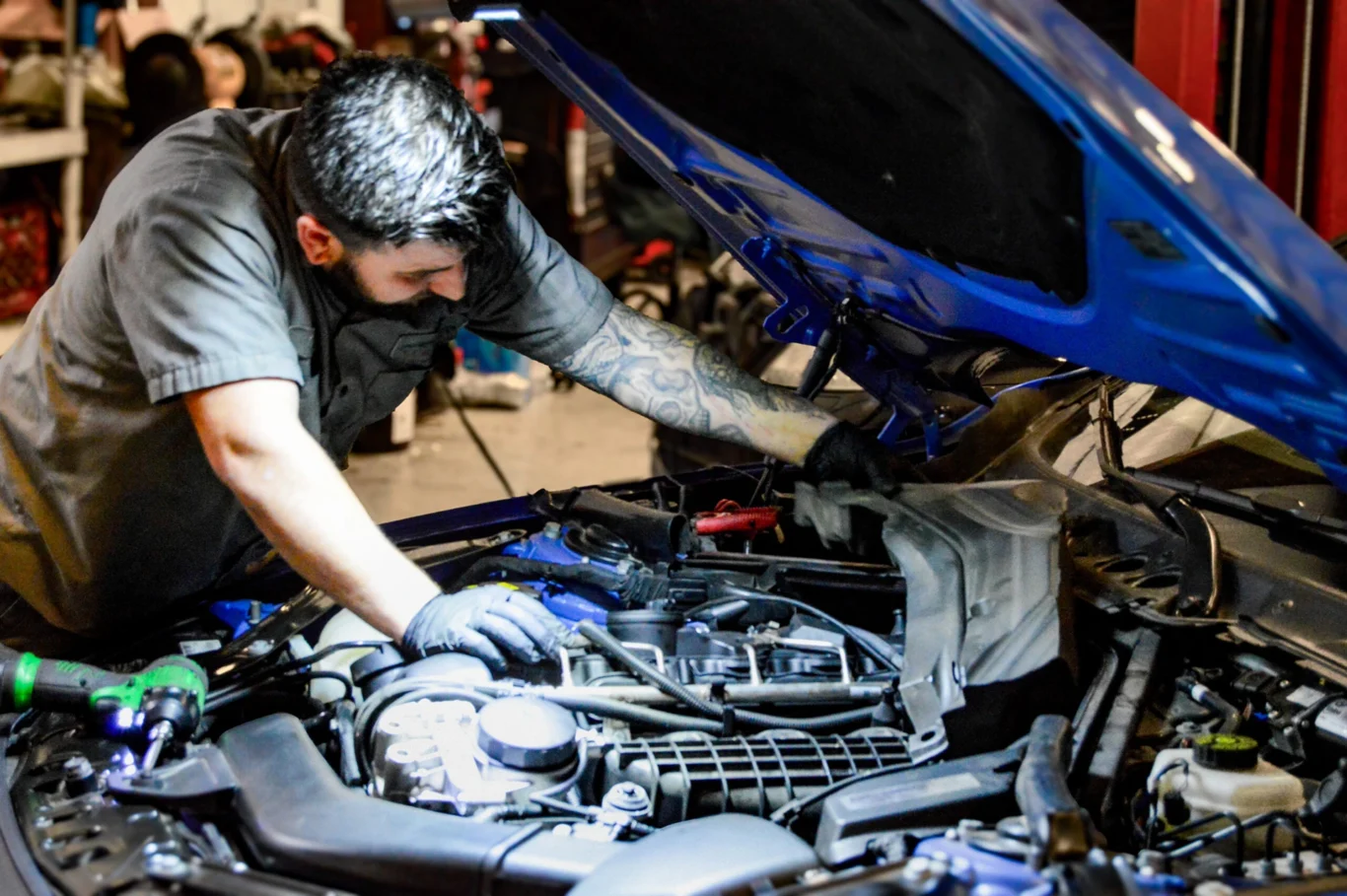
When diagnosing an overheating issue, one of the first priorities is identifying whether a coolant leak is present and where it’s coming from. Leaks can develop in several areas of the cooling system, including the radiator, hoses, water pump, thermostat housing, expansion tank, or even hidden locations like the engine valley on certain vehicles.
Because many coolant leaks only appear when the system is hot and pressurized, they’re not always easy to spot during a basic visual inspection. That’s why a proper cooling system pressure test is so important; it allows technicians to recreate real operating conditions and uncover leaks that might otherwise go unnoticed.
Since many cooling system problems share similar symptoms, we follow a structured diagnostic process to pinpoint the exact cause. We begin by verifying the concern and checking for any stored fault codes that could indicate issues with temperature sensors, fan operation, or the thermostat. From there, we carefully inspect key components like hoses, clamps, the radiator, and the expansion tank for signs of wear, seepage, or cracking. We also evaluate coolant level and condition to determine whether there may be an underlying issue.
If the system is low on coolant, the focus is always on identifying the cause, not just topping it off. We then pressure-test the system and check the radiator cap to ensure it’s maintaining proper pressure. For vehicles that are actively overheating, we evaluate thermostat performance, radiator efficiency, and cooling fan operation. In some cases, components like electric water pumps or electronically controlled thermostats can fail intermittently, so we monitor live temperature data to understand how the system behaves both at idle and while driving.
Once we identify the cause, we explain your options in plain English. For example, a small coolant leak might come from a hardened hose, a failing water pump seal, or a cracked plastic fitting. Each repair has a different level of urgency and labor, and we’ll walk you through what makes the most sense for your situation and timeline.
If your car is running hot, it’s smart to combine cooling checks with a broader vehicle diagnostic appointment so the underlying cause is confirmed before parts are replaced. In some cases, overheating is tied to related issues like oil contamination or internal engine problems, which is why our team may recommend targeted testing alongside engine repair diagnostics when the symptoms point that direction.
You can also view our full list of auto repair services to see how we can help with related vehicle needs.
Coolant Leak Repair in San Antonio
Coolant leak repair starts with finding exactly where the system is losing coolant. Leaks can come from the radiator, hoses, water pump, thermostat housing, reservoir or other cooling system components, and the correct repair depends on the source of the leak. Because coolant can escape slowly from a hose, gasket, or fitting and burn off against a hot engine before it ever reaches the ground, many San Antonio drivers don’t realize they have a leak until the temperature gauge climbs or a low-coolant light comes on. By that point, the engine has often already run hotter than it should.
At Eurasian Auto Repair, coolant leak repair starts with pinpointing exactly where the coolant is escaping — not just topping off the reservoir. Our ASE-certified technicians pressure-test the system to reproduce real operating conditions, then trace the leak to its source. Common sources we repair include:
- Cracked or swollen radiator hoses and worn hose clamps
- Radiator seams, end tanks, and a failing radiator cap
- Water pump seals and gaskets
- Thermostat housings and intake gaskets
- Expansion and overflow tanks and their connecting fittings
- Heater core connections
Once we confirm the source, we replace the failed component with quality parts, refill the system with the correct coolant for your vehicle, and re-test under pressure to verify the repair holds. For the European and Asian models we specialize in — which often use specific coolant types and bleeding procedures — we follow the manufacturer’s specification so the system fills and circulates correctly the first time.
If you’ve noticed a sweet smell, steam after shutdown, or coolant spots in your driveway, don’t wait for a small leak to turn into a blown head gasket or warped engine components. Request an appointment at our San Pedro Avenue or North I-35 location and we’ll get the leak identified and repaired before it costs you an engine.
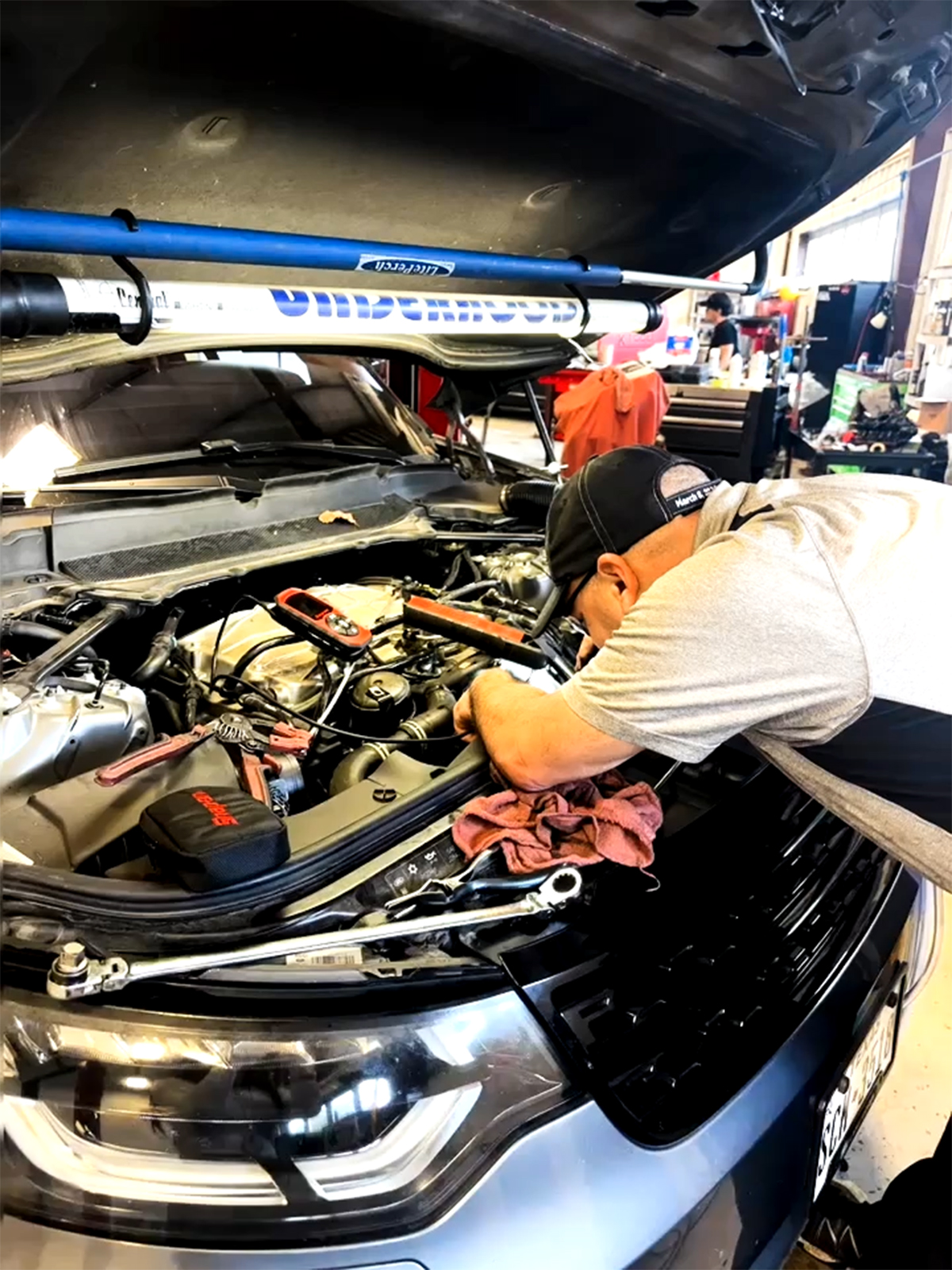
Radiator Repair, Thermostat Replacement & Water Pump Service in San Antonio
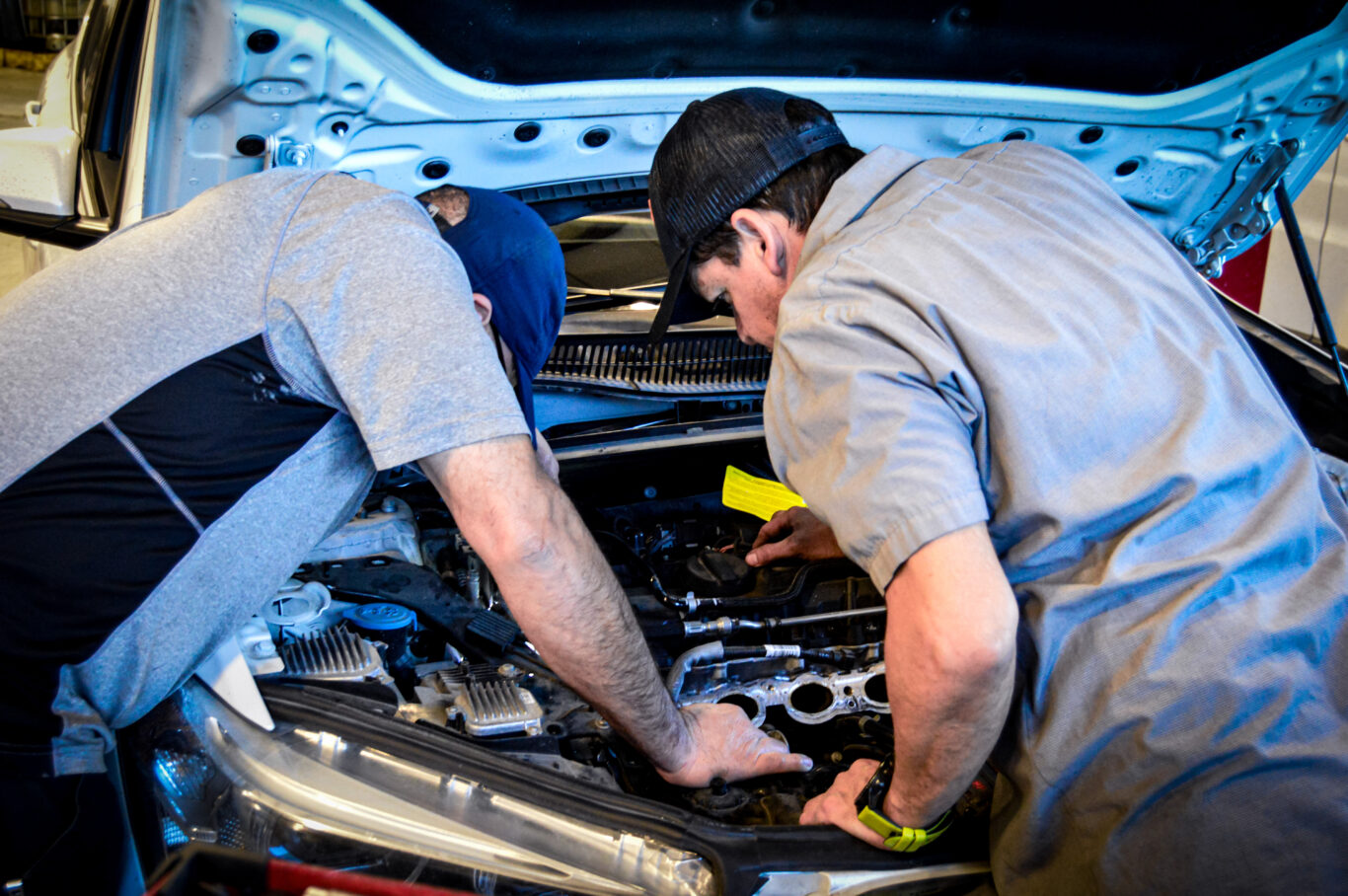
Your vehicle’s radiator, thermostat, water pump, hoses and coolant work together to keep the engine operating at the proper temperature. Eurasian Auto Repair provides radiator repair and replacement in San Antonio along with thermostat replacement, water pump repair and other cooling system services.
If your vehicle is overheating, losing coolant or showing signs of a radiator leak, our technicians can inspect the system, identify the source of the problem and recommend the appropriate repair.
We also see cooling fans and fan control issues. When a fan doesn’t run at the correct speed, the car may overheat only at idle or in slow traffic. In modern vehicles, the fan system is often computer-controlled, so a relay, control module, sensor, or wiring problem can mimic a bad fan. We test before we replace, because that keeps the repair accurate and avoids repeat visits.
After any component replacement, proper coolant service matters. Many vehicles require specific coolant types and a precise bleeding procedure to remove air pockets. Trapped air can cause fluctuating temperatures, poor cabin heat, and false low-coolant warnings. We refill to the correct specification, bleed the system thoroughly, and verify stable temperature control on a road test.
For convenience, you can choose the shop that fits your day. Our San Pedro Ave. location and our I-35 location both offer dealership-level diagnostics with a family-owned approach, plus after-hours options that make drop-off and pick-up easier.
Why Choose Eurasian Auto Repair For Cooling System Repair In San Antonio
Cooling system repairs are high-stakes because one overheat event can do real damage. That’s why we emphasize diagnosis, documentation, and doing the job the right way the first time. Our team services European and Asian vehicles every day, and we also work on domestic makes and models, so we can follow the correct procedures and specifications for each platform.
You’ll also get practical guidance on what to do next. If your cooling system failed because multiple parts are near the end of their service life, we’ll explain which repairs are critical now and which can be planned. We back qualifying repairs with our in-house 4-year/40,000-mile limited warranty, so you can drive away with more confidence in the work that was performed.
If you’d like details on coverage, see our repair warranty information. If a larger repair pops up at an inconvenient time, you can also review financing options and decide what works best for your budget.
A common example we see is a vehicle that only overheats in traffic. On the highway, airflow helps the radiator keep up, but at idle the fan system has to do the work. If the fan isn’t commanded on, or it runs at a reduced speed, temperatures climb until you start moving again. With live data testing, we can confirm whether the fan is being commanded properly, whether the fan is capable of full speed, and whether the temperature reading itself is accurate.