Why You Shouldn’t Ignore a Coolant Leak
A coolant leak can seem minor at first. Maybe you notice a small puddle under your car, a sweet smell after driving, or a low-coolant warning that comes and goes. It is easy to assume you can just top it off and keep driving. The problem is that coolant leaks rarely stay small for long. Your cooling system depends on the right coolant level and proper pressure to control engine temperature. When that balance is off, a seemingly simple leak can turn into overheating, drivability problems, and much more expensive repairs.
In many cases, a prompt coolant leak repair in San Antonio can make the difference between a manageable leak repair and major engine damage. Even a small coolant leak can lead to significant problems if it is not addressed early.
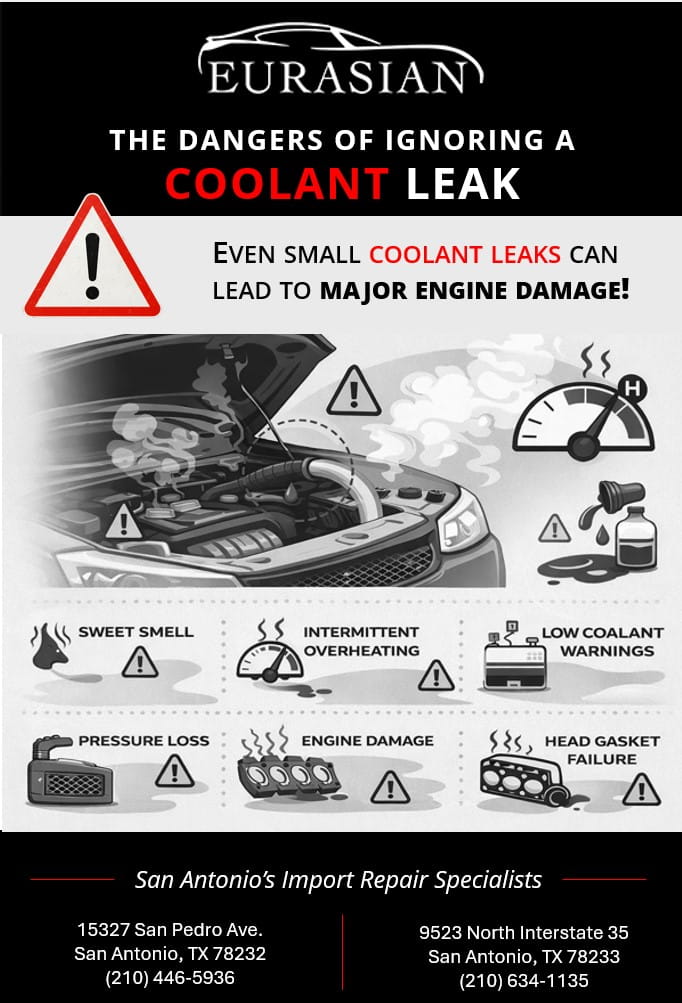
A Coolant Leak Is Not Just A Fluid Problem
Your engine creates a lot of heat every time you drive. Coolant circulates through the engine and radiator, the thermostat manages flow, and the cooling fans help regulate temperature, especially in traffic or while idling. The system also relies on pressure to raise the coolant’s boiling point. When coolant escapes through a hose, radiator seam, water pump, thermostat housing, expansion tank, or another weak point, the system can lose pressure and cooling efficiency faster than many drivers expect.
That is one reason San Antonio cooling system repair should not be delayed once you notice a leak, warning light, or rising temperature gauge. Even before the gauge reaches the danger zone, you may already be driving with reduced protection. Over time, that can put added stress on the engine, especially in San Antonio heat and traffic.
Small Signs Of A Coolant Leak Can Point To Bigger Cooling System Problems
Not every coolant leak leaves a bright puddle in your driveway. Some leaks only show up when the system is hot and pressurized. In other cases, coolant can drip onto hot engine parts and evaporate before you ever see it on the ground.
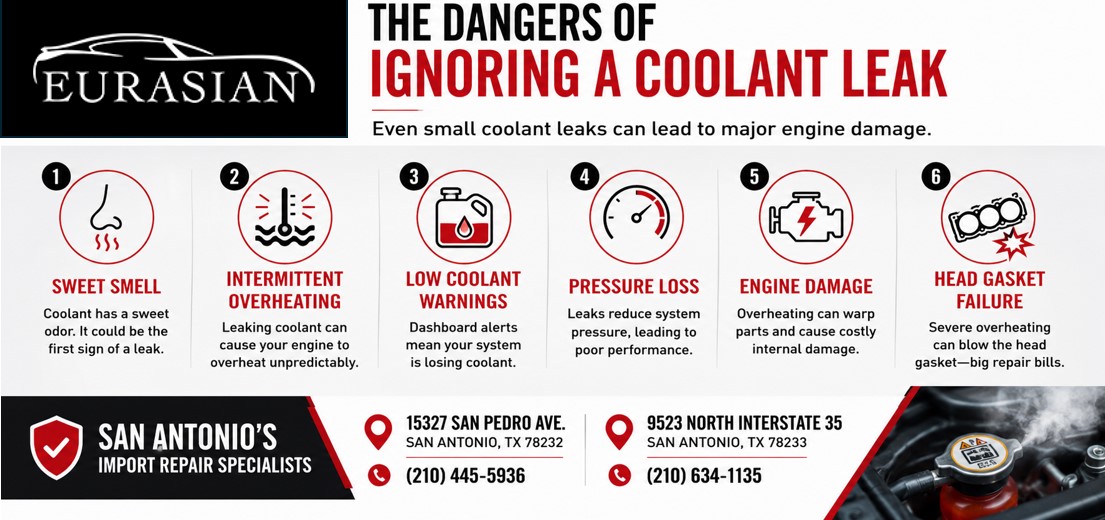
By the time engine overheating becomes obvious, the cooling system may already be struggling with low pressure, poor circulation, or a failing component. A few warning signs that may point to a coolant leak or developing cooling-system problem include:
- A sweet odor after driving
- The temperature gauge running higher than normal
- Repeated low-coolant alerts
- Damp residue around hoses, the radiator, or the coolant reservoir
- Steam from under the hood
- Weak cabin heat in some cases
These symptoms do not always point to the exact same repair, which is why proper testing matters. A cracked hose, weak cap, radiator leak, failing water pump, stuck thermostat, or hidden internal problem can all produce overlapping signs. Eurasian’s diagnostic process includes checking fault codes, inspecting components for seepage or cracking, pressure-testing the system, and evaluating thermostat, radiator, and fan operation before recommending repairs.
Why Topping Off Coolant Is Not Enough
Adding coolant may help in the moment, but it does not solve the problem. Topping off can help in an emergency, but it is not a fix, and using the wrong coolant type or mixing coolants can create corrosion and deposits. The real priority is finding the source of the loss and correcting it.
Drivers often assume the problem is solved when the warning goes away, but settling for a refill instead of a proper repair can let the underlying leak keep getting worse. The car may seem fine again for a day or two. Then the warning comes back. Then the temperature starts creeping up in traffic. Then the problem gets worse.
Ignoring the leak often leads to a cycle of temporary fixes, uncertain reliability, and a higher repair bill later. It is much better to catch a worn hose or failing seal before it contributes to overheating or engine damage.
Engine Overheating Can Get Expensive Fast
When coolant level drops and system pressure falls, the engine can overheat much faster than expected. What starts as a worn hose or cracked expansion tank can escalate into major repairs such as a blown head gasket or warped engine components. Once overheating starts, the issue is no longer just a coolant leak. It becomes a threat to the engine, head gasket, and long-term reliability of the vehicle.
That is the real risk with putting off a coolant leak. It is not just about replacing fluid. It is about protecting the engine itself. If overheating has already started, it may make sense to pair the repair with a closer look at engine repair in San Antonio so related damage is not missed.
For example, a driver might notice a low-coolant warning on Monday, top it off, and keep driving all week. By Friday, the leak may be worse, the cooling fan may be working overtime, and the vehicle may start running hot during stop-and-go traffic. What could have started as a focused cooling system repair can become a much more involved engine issue.
The Coolant Leak May Not Be Where You Think It Is
One of the trickiest parts of coolant leaks is that the visible evidence is not always at the source. Coolant can travel along hoses, splash shields, or engine components before dripping somewhere else. Some leaks appear only under load or only after the engine has reached operating temperature.
That is why guesswork often wastes time and money. Replacing the wrong part does not solve the issue. Accurate diagnostics first is the smarter approach, especially when cooling system symptoms overlap with other concerns. If your vehicle has been running hot, pairing a cooling-system evaluation with a car diagnostic appointment can help confirm the underlying cause before parts are replaced.
Common Causes Behind Coolant Leaks And Cooling System Repairs
Every vehicle is a little different, but several cooling-system trouble spots show up again and again. Radiators can leak at the tanks or seams. Water pumps can leak through the weep hole, make noise, or lose flow. Thermostats can fail in ways that affect temperature stability. Hoses and plastic fittings can weaken over time and split unexpectedly.
That is why the right repair depends on the real failure point, the condition of surrounding parts, and whether related coolant system repairs should be handled at the same time. If the issue turns out to involve more than the cooling system alone, it may also make sense to review related auto repair services for a more complete fix.
Why San Antonio Drivers Should Act Early On Cooling System Repair
Heat is hard on vehicles, and cooling-system problems tend to become much more noticeable when outside temperatures rise or when you spend more time idling in traffic. A leak that seems manageable during a short drive can become much more serious under heavier thermal load.
That is one reason drivers benefit from bringing the car in before they are stranded. Eurasian offers service at both its San Pedro Ave. location and its North Interstate 35 location, making it easier to get the vehicle checked before a small coolant leak turns into a breakdown.
What To Do If You Suspect A Coolant Leak
If you think your car may be losing coolant, do not ignore the signs. Check for warning lights, watch the temperature gauge, and avoid pushing the vehicle if it starts running hot. If the gauge moves into the red or you see steam, pull over safely and shut the engine off.
From there, the next step is simple: get the issue diagnosed properly. If you are also seeing a temperature warning light, strange smells, or inconsistent heat from the vents, mention that when you schedule so the team can narrow the cause faster.
At Eurasian Auto Repair, the goal is to diagnose the problem first, explain the cause in plain English, and help you make the right repair decision for your vehicle and timeline. With ASE-certified technicians, two San Antonio locations, warranty-backed repair work, and strong customer reviews, the focus is on fixing the real issue before it becomes a much bigger one.
If your car is showing signs of a leak, overheating, or repeated low-coolant warnings, schedule a cooling system repair appointment, use the online schedule page, or reach out through the contact page. Getting clear guidance now can help you avoid a breakdown and protect your engine from unnecessary damage.