Coolant Leaks 101: Signs, Causes, and When You Need Coolant System Repair
If your vehicle is losing coolant, do not ignore it. Even a small coolant leak can quickly lead to overheating, engine damage, and more expensive repairs if the problem is left unchecked.
At Eurasian Auto Repair, we take a systematic approach to diagnosing cooling system problems. We do not just look for where coolant is escaping. We also look for why the issue started in the first place, so San Antonio drivers get the right repair the first time.
Whether you notice fluid under your car or you keep topping off the reservoir, early diagnosis is the best way to avoid overheating and protect your engine before a minor issue turns into a major one.
What are the signs of a coolant leak?
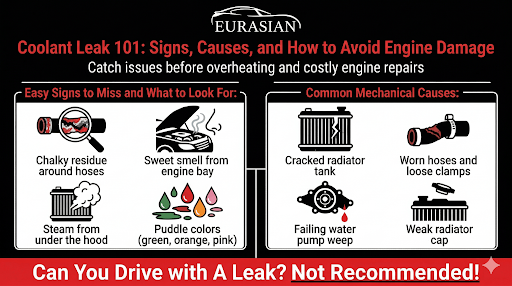
The most common signs of a coolant leak are puddles under your vehicle, a sweet smell, low coolant levels, and rising engine temperatures.
If you are not sure what to look for, coolant leaks can be easy to miss at first. You may notice a small puddle under your vehicle that appears bright green, orange, pink, or yellow, depending on the type of coolant your vehicle uses. In some cases, the fluid dries and leaves behind a chalky or crusty residue around hoses, fittings, or the radiator.
Another common warning sign is a sweet smell coming from the engine bay, especially after driving. In more advanced cases, you may notice steam from under the hood if coolant is reaching hot engine components.
Why is my car leaking coolant?
Most coolant leaks happen because a hose, radiator, water pump, thermostat housing, or cap has worn out or failed.
Your vehicle’s cooling system operates under pressure and goes through constant temperature changes. Over time, that stress can wear down components and create leaks. Some of the most common causes include:
- Cracked or aging radiator tanks and seams
- Worn hoses or loose clamps
- Failing water pump seals
- Leaks at the thermostat housing or gasket
- A weakened or faulty radiator cap
- Internal corrosion within the cooling system
In some cases, the issue may also involve a damaged radiator, cracked plastic tank, or failing connection that eventually leads to larger radiator repairs. What starts as a minor seep often gets worse as heat and pressure build, which is why catching the problem early matters.
How do technicians find a coolant leak?
The most reliable way to find a coolant leak is with a full inspection and cooling system pressure test.
Some leaks only show up when the engine is hot or the system is under pressure, which makes them easy to miss during a quick visual check. A proper diagnosis typically includes:
- A visual inspection of hoses, the radiator, and other cooling components
- Checking coolant level and coolant condition
- Looking for dried residue or staining from earlier leaks
- Performing a cooling system pressure test
- Using dye testing when needed to locate hidden leaks
This process helps identify whether the problem is a hose, radiator, water pump, thermostat housing, or another cooling system component, so you are not paying for parts or repairs you do not need.
Why is my coolant low if no leak is visible?
If your coolant keeps dropping, there is usually still a leak or internal problem even if you do not see fluid on the ground.
Some leaks only happen under pressure or at operating temperature. In other cases, coolant may be escaping internally because of a more serious problem, such as a head gasket issue. Slow coolant loss can also happen after repeated overheating events.
If your coolant level keeps dropping but no obvious leak is visible, professional testing is the safest next step. Ignoring the problem can lead to significant engine damage over time.
Can a thermostat or water pump cause a coolant leak?
Yes, both a thermostat housing and a water pump can leak coolant as they age or their seals fail.
A thermostat can leak if the housing cracks or the gasket fails, allowing coolant to escape at the connection point. A water pump is also a common failure point. As the internal seal wears out, coolant may leak from the weep hole or around the pump itself.
If either component is leaking, the problem can quickly affect engine temperature and cooling system performance.
Is it safe to drive with a coolant leak?
No, it is not safe to keep driving with a coolant leak because even a small leak can lead to overheating.
When coolant levels drop, your engine can no longer regulate temperature properly. That can cause the engine to run hot enough to damage the head gasket, warp metal components, or leave you stranded on the side of the road.
If you suspect a coolant leak, it is best to have the system inspected as soon as possible rather than risk more serious and more expensive damage.
How much does coolant leak repair cost?
The cost of a cooling system repair in San Antonio depends on what is leaking and how involved the repair is.
For example, replacing a worn hose or clamp is usually a simpler and less expensive fix. Radiator repairs or radiator replacement tend to be more involved. Water pump replacement can vary quite a bit depending on the vehicle. Internal engine repairs, such as head gasket work, are typically the most extensive.
The most important step is getting an accurate diagnosis. Once the source of the leak is confirmed, you can make the right repair instead of guessing.
If you are dealing with a coolant leak or need cooling system repair in San Antonio, our team can inspect the system, explain the cause, and recommend the right fix. You can also explore our full range of auto services if your vehicle needs additional maintenance or repair.