Why Land Rovers Overheat: Land Rover Repair Tips for Owners and Buyers
Land Rovers, especially older models like the Land Rover Discovery, Range Rover Sport, and Range Rover have developed a reputation for overheating. However, the problem is rarely caused by one single defect. In most cases, overheating happens because of cooling system design choices and normal wear over time. For owners searching for Land Rover repair in San Antonio, understanding these common overheating causes can help you catch cooling system problems before they turn into major engine repairs.
Understanding why this happens can help current owners maintain their vehicles and help buyers make smarter decisions when considering a Land Rover.
Why Land Rover Cooling Systems Are Sensitive to Heat and Wear
Many Land Rover engines are designed to run at higher temperatures to improve fuel efficiency and meet emissions standards. Because of this, the cooling system must work very precisely. Even small problems can lead to overheating.
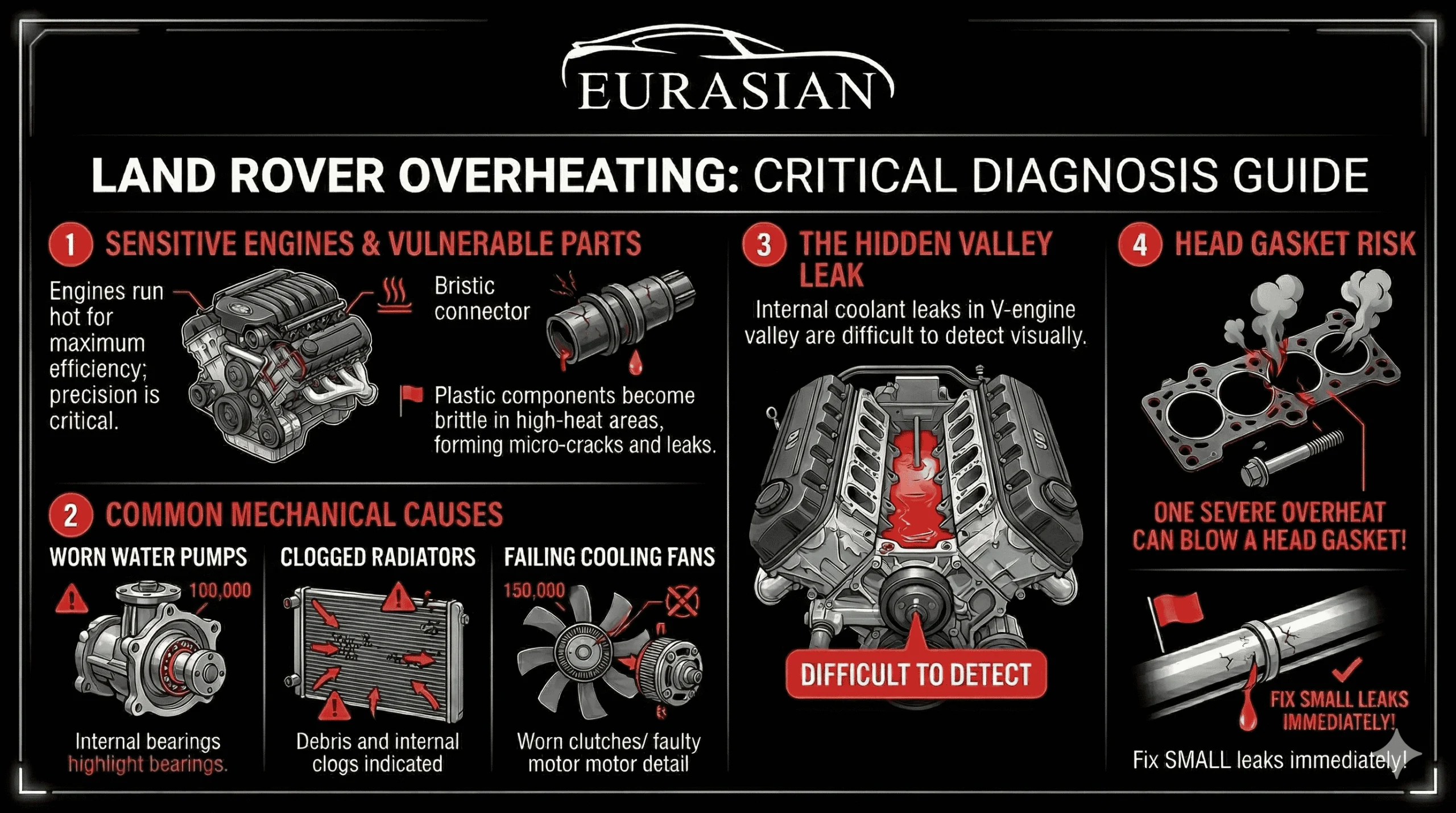
One reason is the use of plastic cooling system components in areas that experience high heat. Parts such as thermostat housings, coolant expansion tanks, radiator end tanks, and coolant pipe connectors are often made from plastic rather than metal.
Over time, repeated heating and cooling cycles can cause these parts to become brittle. Small cracks may form, allowing coolant to slowly leak out. Even a small leak can eventually cause engine temperatures to rise.
Land Rover cooling systems also tend to be less forgiving of minor issues than some other vehicles. Problems that might not cause immediate overheating in other cars can quickly become serious in a Land Rover.
For example:
- A slightly clogged radiator
- A weak thermostat
- A failing cooling fan
- A small coolant leak
Because the engine already operates near its optimal temperature range, these issues can quickly push the system past its limits.
Another challenge can occur after coolant service. Some Land Rover engines can be difficult to properly bleed after a coolant flush. If air pockets remain trapped in the system, coolant may not circulate correctly. This can create hot spots in the engine and cause sudden temperature spikes.
Common Mechanical Causes of Land Rover Overheating
Several mechanical issues commonly lead to overheating if they are not addressed early.
One of the most common problems is water pump wear. Over time, the pump’s internal bearings or impeller blades can wear down. When this happens, coolant flow through the engine decreases, especially when the vehicle is idling or moving slowly.
Radiators and cooling fans can also create problems.
Radiator issues may include:
- Internal clogging
- Debris blocking airflow
- Cracked plastic radiator tanks
Cooling fans may fail due to:
- Worn fan clutches (in older models)
- Faulty electric fan motors
- Malfunctioning temperature sensors
Without proper airflow across the radiator, the engine may overheat, especially in traffic or during hot weather.
If an engine overheats even once, it can also damage the head gasket. When a head gasket fails, combustion gases may enter the cooling system, causing ongoing overheating and coolant loss.
If your vehicle is running hot or losing coolant, scheduling cooling system repair in San Antonio early can help prevent head gasket failure and more expensive engine damage.
Because of this risk, Land Rover specialists, like the ASE certified mechanics at Eurasian Auto Repair recommend addressing cooling system problems as soon as they appear.
Land Rover Engines With Higher Overheating Risk
Some Land Rover engines have historically been more prone to overheating than others.
One of the most well-known examples is the 5.0-liter supercharged V8 (AJ133) used in many Range Rover and Range Rover Sport models between 2010 and 2022. This engine relies on plastic coolant crossover pipes located under the intake manifold or supercharger. When these pipes crack, coolant can leak into the engine valley, an area between the cylinder banks where leaks are difficult to see.
Another engine with a history of cooling system problems is the 4.4-liter BMW V8 (M62) used in early 2000s Range Rover models. These engines use several plastic cooling system components that often begin failing around 80,000 miles.
Older Rover V8 engines, such as the 4.0-liter and 4.6-liter engines used in earlier Discovery and Range Rover models can also suffer serious damage if they overheat due to their aluminum block design.
The Hidden “Valley Leak” Problem in Some Land Rover Engines
A lesser-known cause of overheating in some Land Rover engines is called a valley leak.
In V-shaped engines, coolant pipes often run through the space between the two cylinder banks. This space is known as the engine valley. Over time, heat, pressure, and vibration can cause these pipes to crack.
Because these pipes sit beneath the intake manifold or supercharger, coolant can leak into the engine valley and evaporate before it ever drips onto the ground.
This makes the issue hard to detect. Drivers may notice:
- Slow coolant loss
- Occasional temperature spikes
- Coolant warning lights
- No visible leaks under the vehicle
Repairing a valley leak often requires removing several engine components, which is why the repair can be expensive.
Are Newer Land Rovers Less Likely to Overheat?
The good news is that newer Land Rover models generally experience fewer overheating issues.
Modern vehicles like the Land Rover Defender and newer Range Rover models often use Ingenium inline-six engines. These engines feature improved thermal management and fewer hidden coolant pipes.
The 3.0-liter supercharged V6 (AJ126) used in several mid-2010s models is also considered more reliable than the larger supercharged V8 engines. While it still contains some plastic cooling components, major failures are less common.
How Preventive Maintenance Helps Prevent Land Rover Overheating
Despite their reputation, many mechanics believe Land Rovers can be very reliable when their cooling systems are properly maintained.
Preventive maintenance typically includes:
- Replacing the thermostat and water pump every 80,000–100,000 miles
- Inspecting coolant pipes and the expansion tank regularly
- Flushing coolant every 3–5 years
- Checking cooling fan operation and radiator airflow
- Fixing even small coolant leaks immediately
Because many cooling system parts are plastic, replacing them before they fail can prevent larger repairs later.
What San Antonio Land Rover Owners Should Remember
Land Rover overheating issues are usually caused by cooling system complexity and aging components, not a single design flaw. Engines that run hotter for efficiency and rely on plastic cooling system parts can be sensitive to small maintenance problems.
However, with proper care and routine inspections, many owners find their Land Rovers to be dependable vehicles. For buyers considering a Land Rover, the most important factors are model year, engine type, and maintenance history. Newer models with updated engines and well-maintained cooling systems are far less likely to experience overheating problems.
Trusted Land Rover Repair in San Antonio for Cooling System Problems
Eurasian Auto Repair is the shop drivers trust for auto repair in San Antonio, including Land Rover cooling system diagnostics, maintenance, and repairs. Our ASE-certified technicians understand the unique challenges these vehicles present, including complex cooling systems and overheating issues, and focus on proactive maintenance to prevent costly repairs. With a reputation for honest service and specialized expertise, Eurasian Auto Repair helps San Antonio drivers keep their vehicles running safely and efficiently.
If your Land Rover is overheating, losing coolant, or showing temperature warnings, schedule an inspection before a minor issue becomes a major repair.